Piel que muda
Espacio Flexible, Nave Oporto. 2026
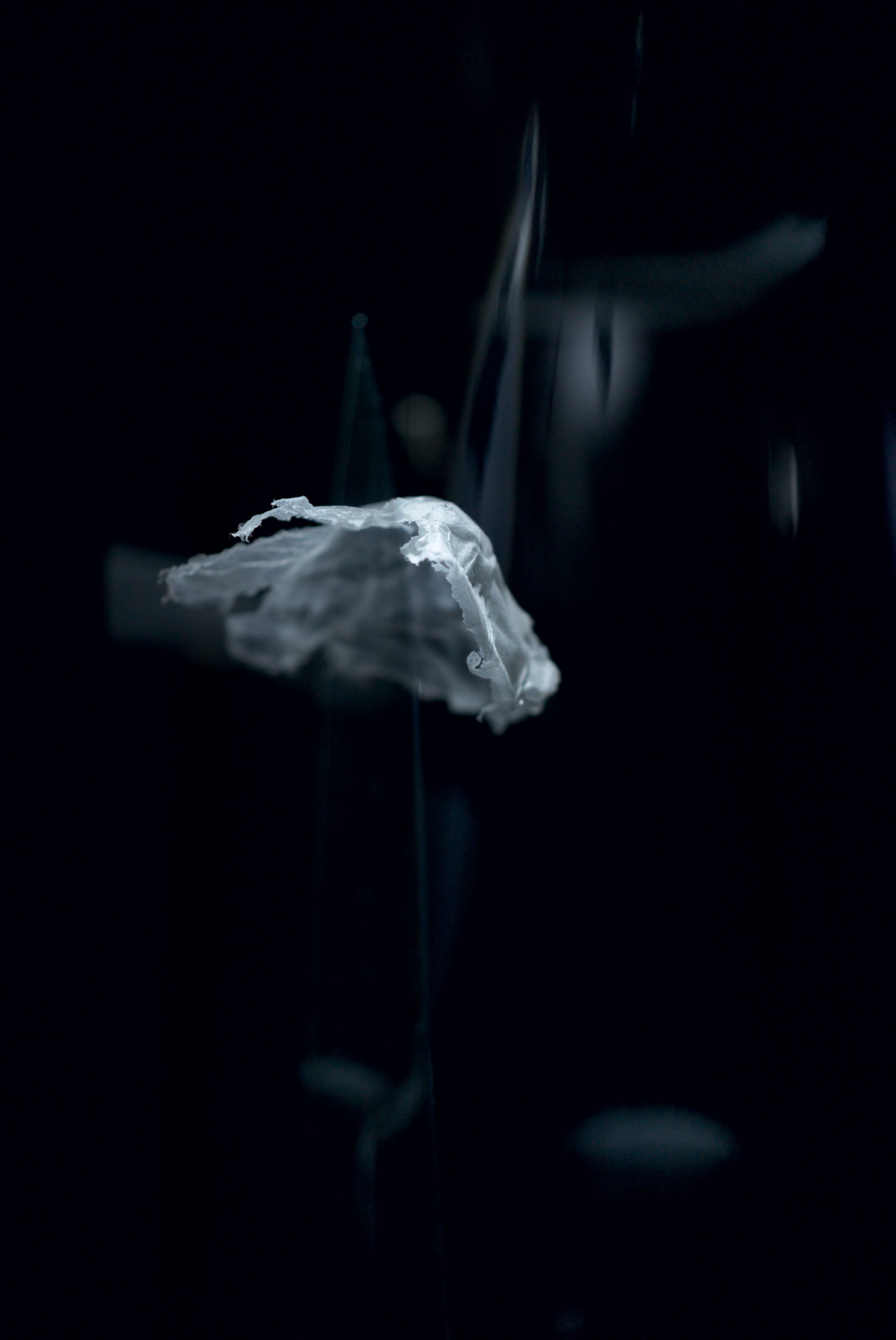
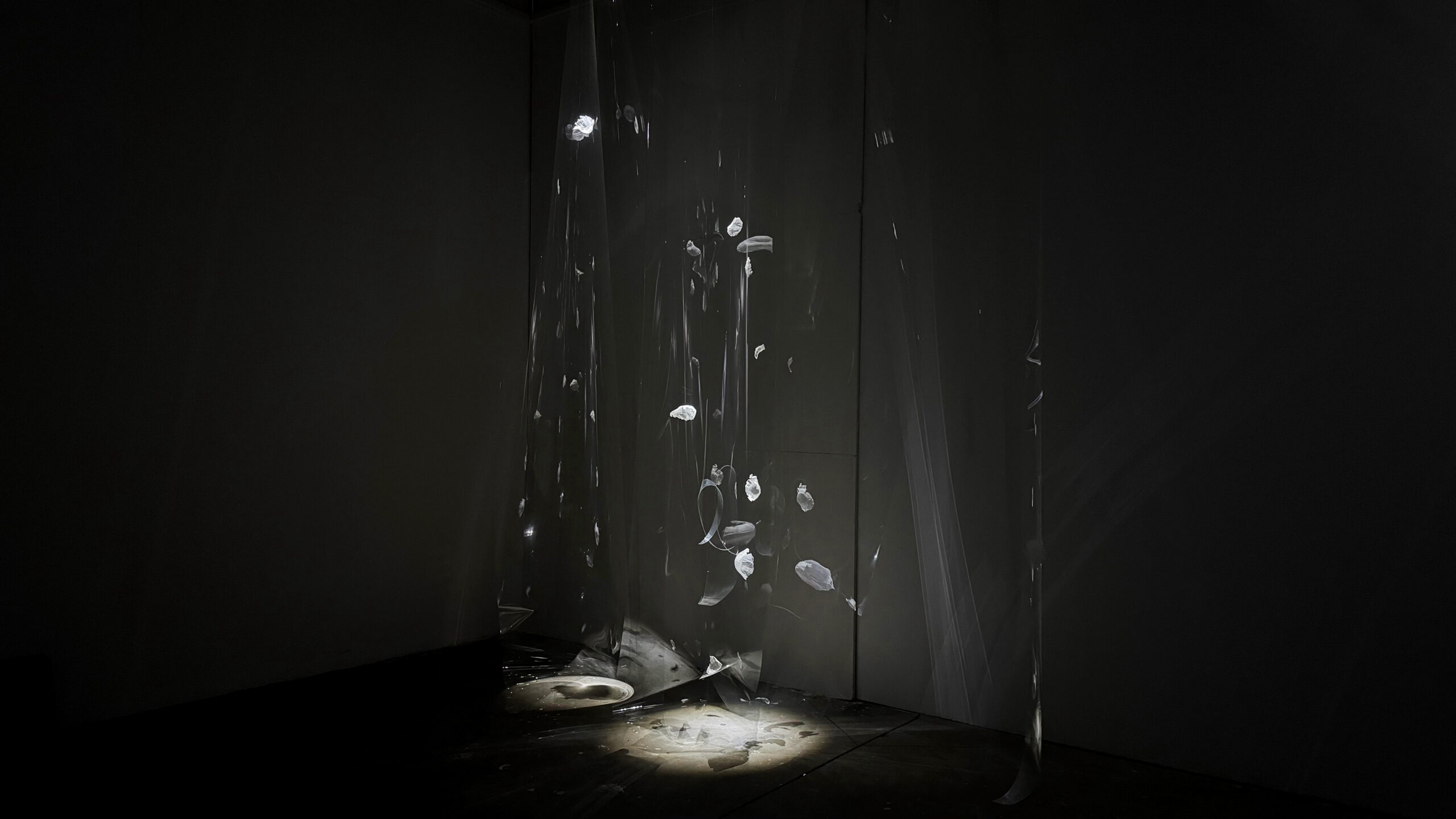
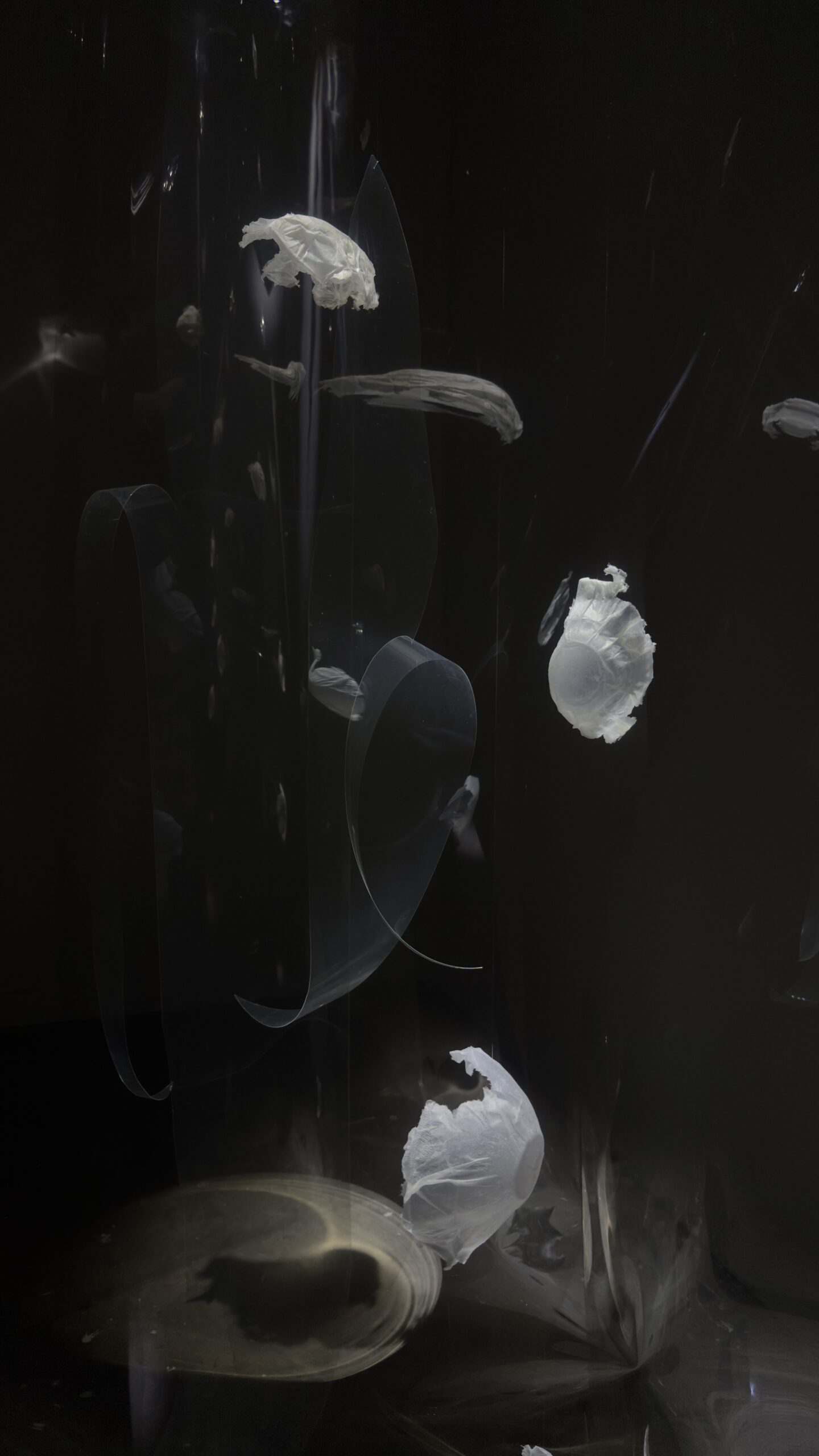
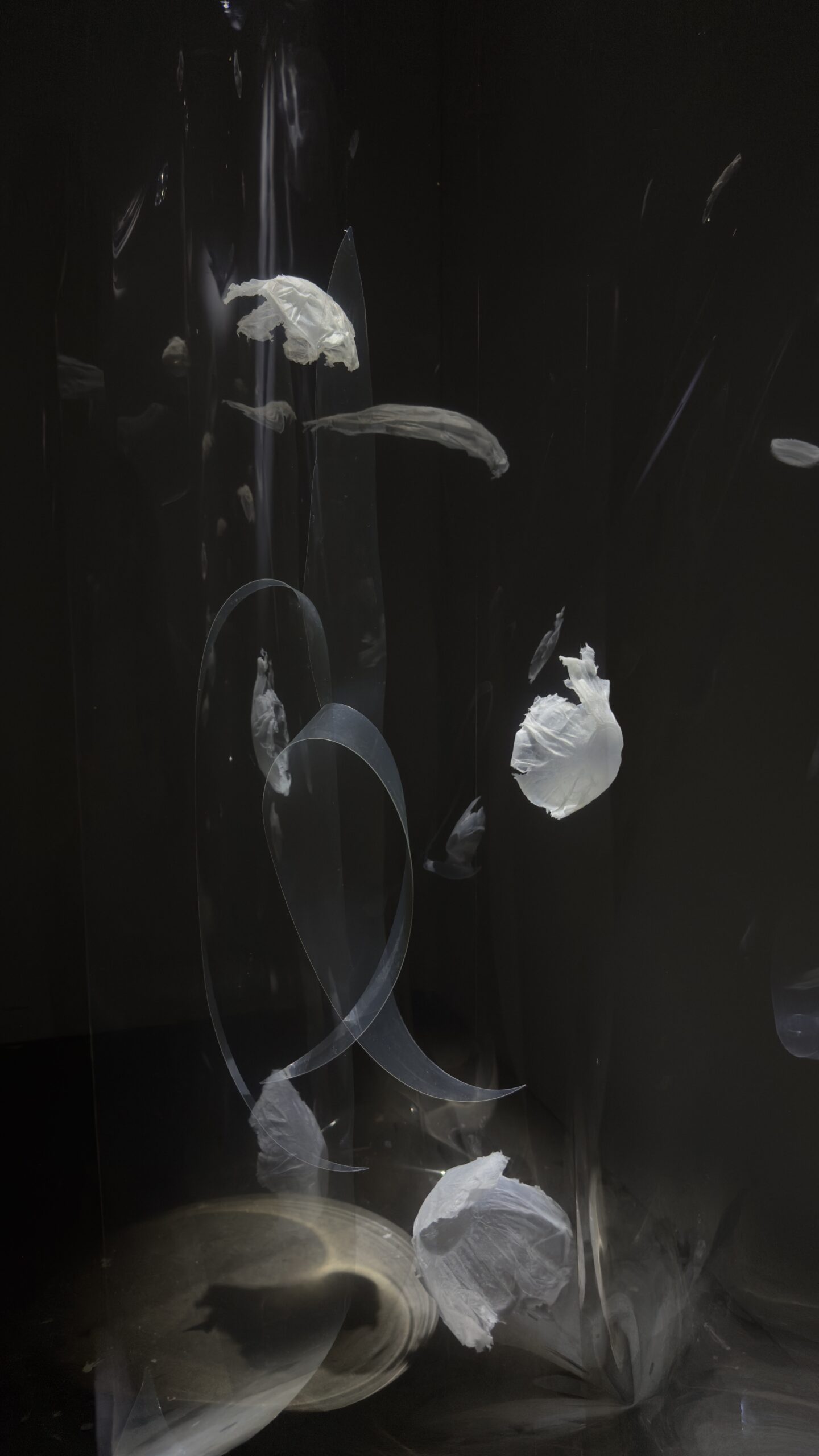
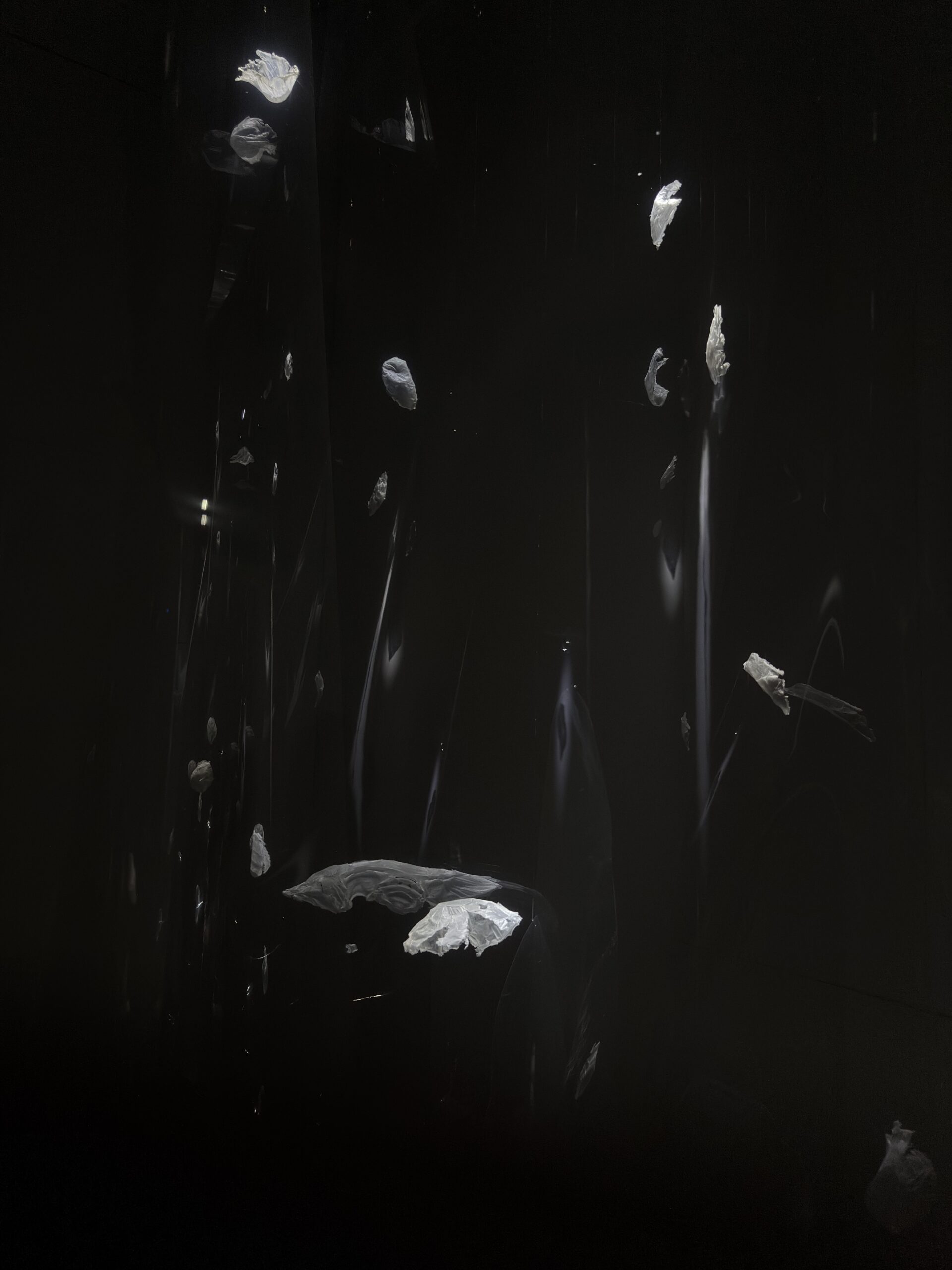
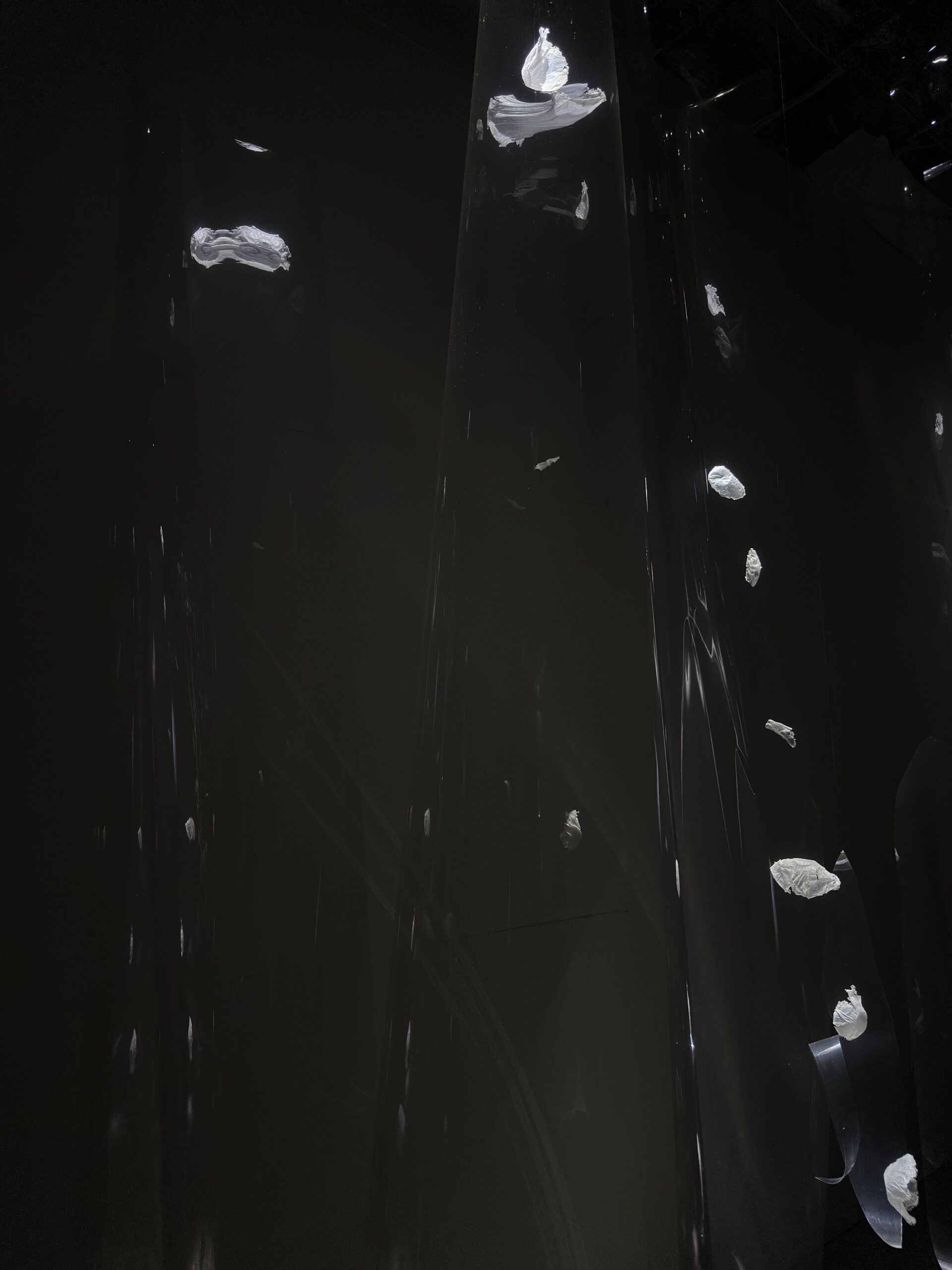
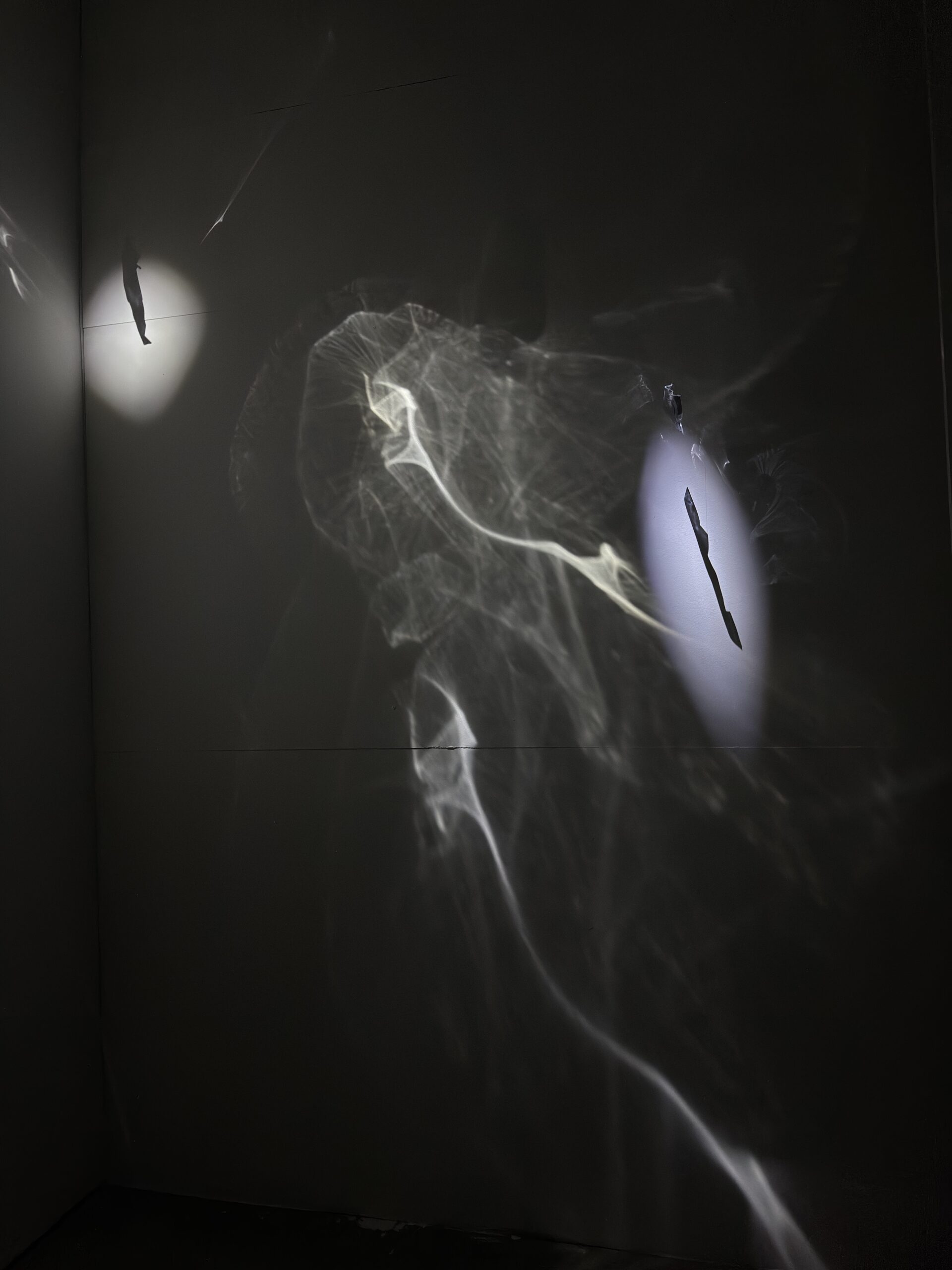
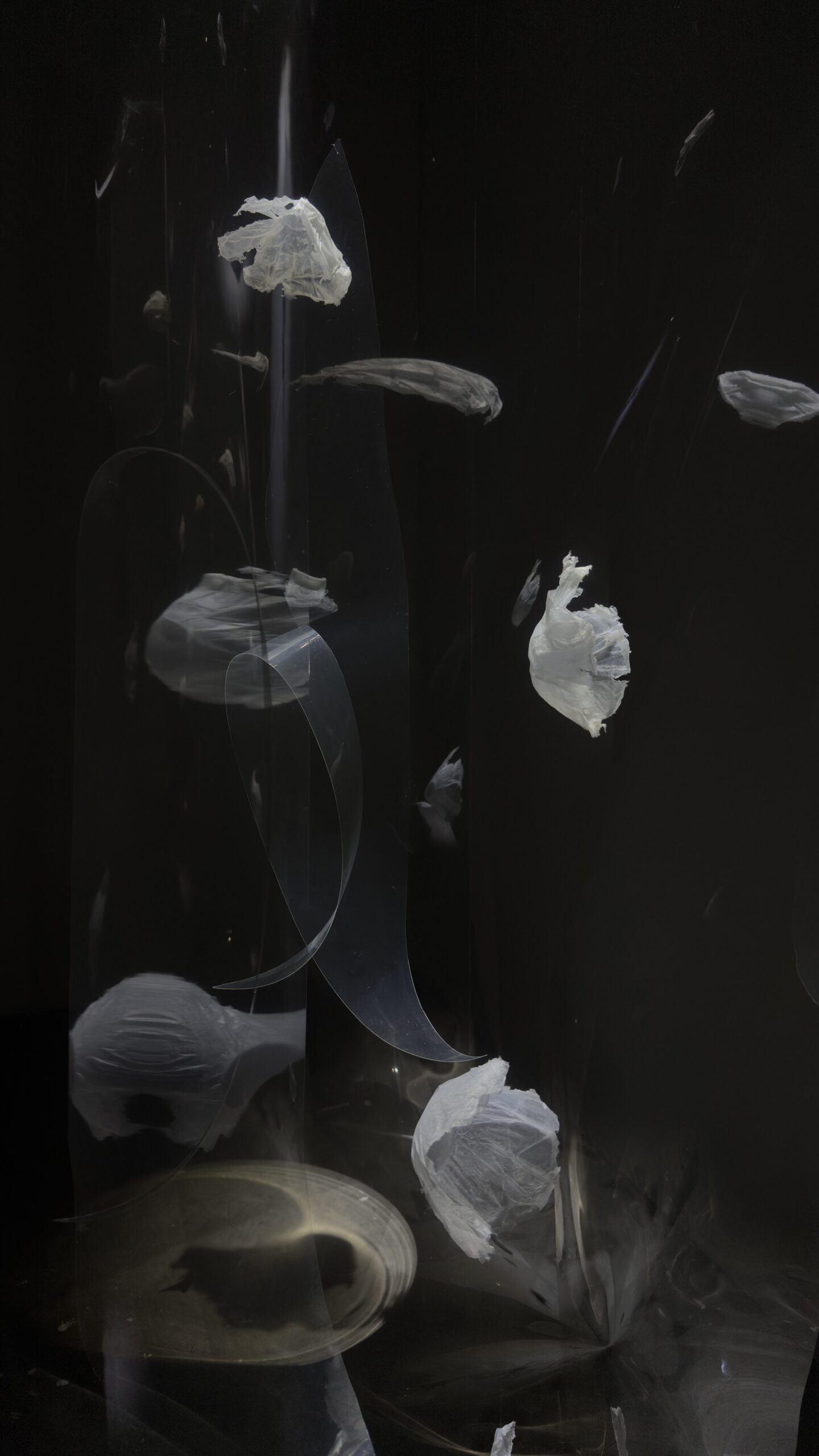
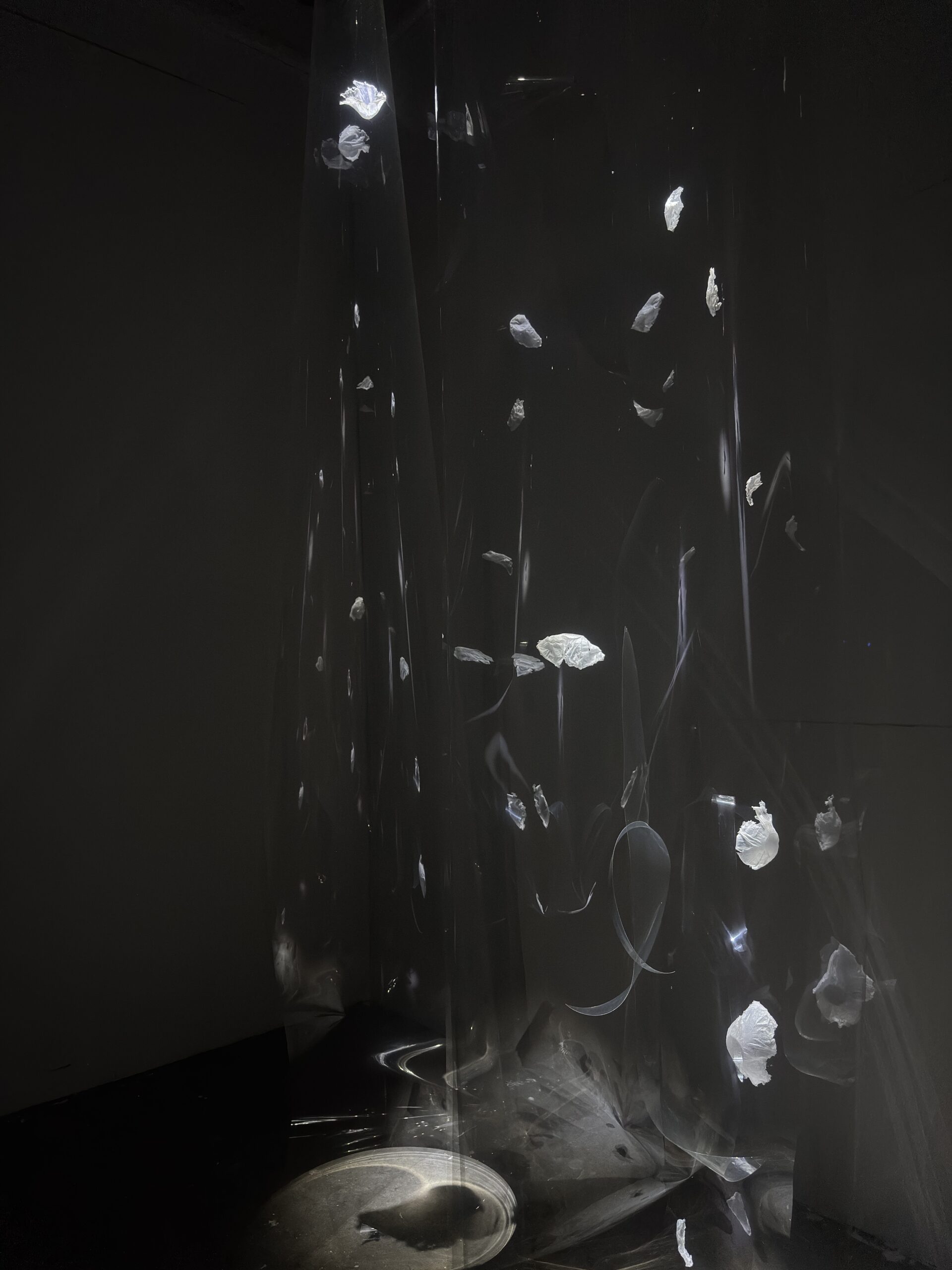
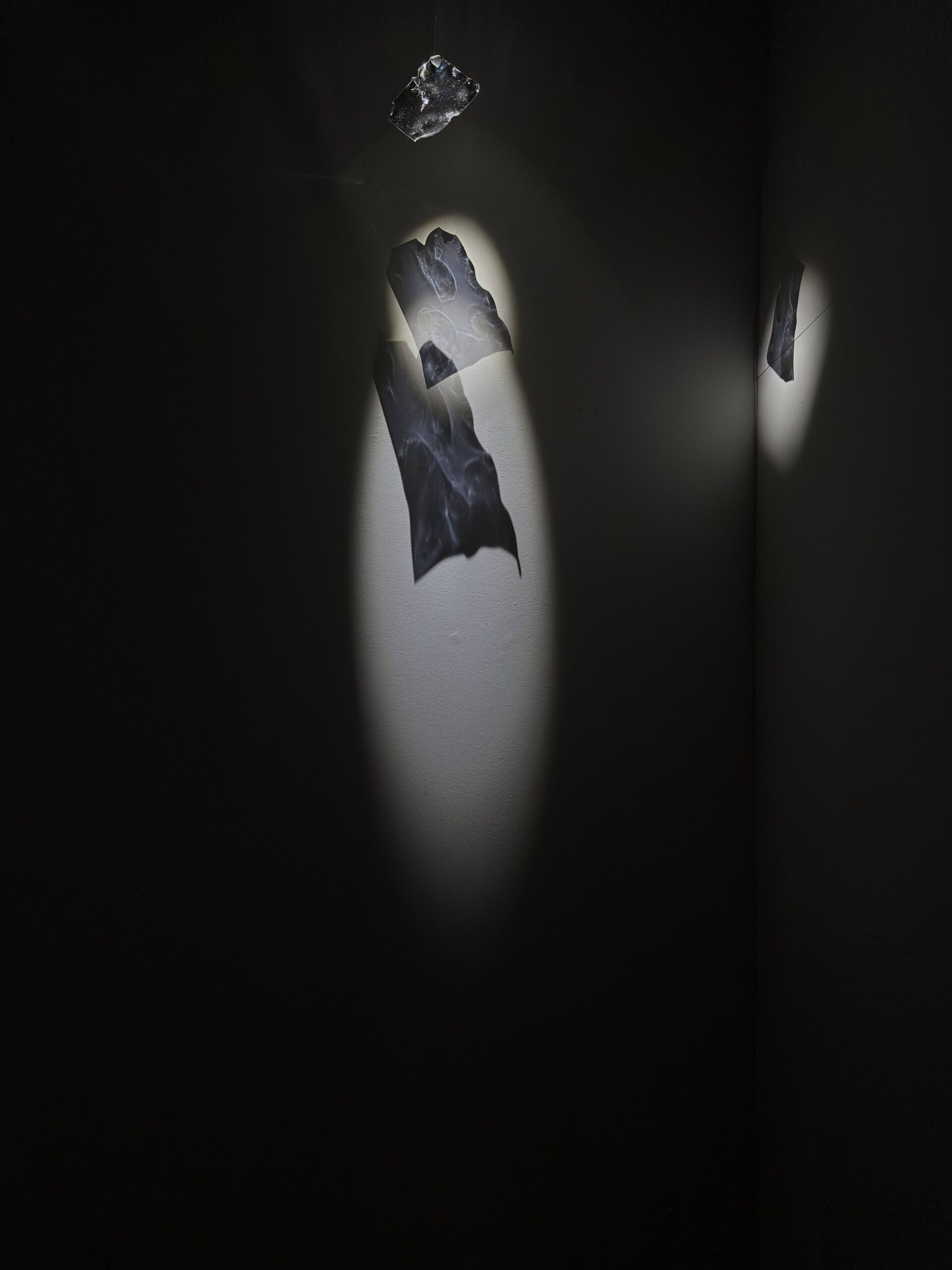
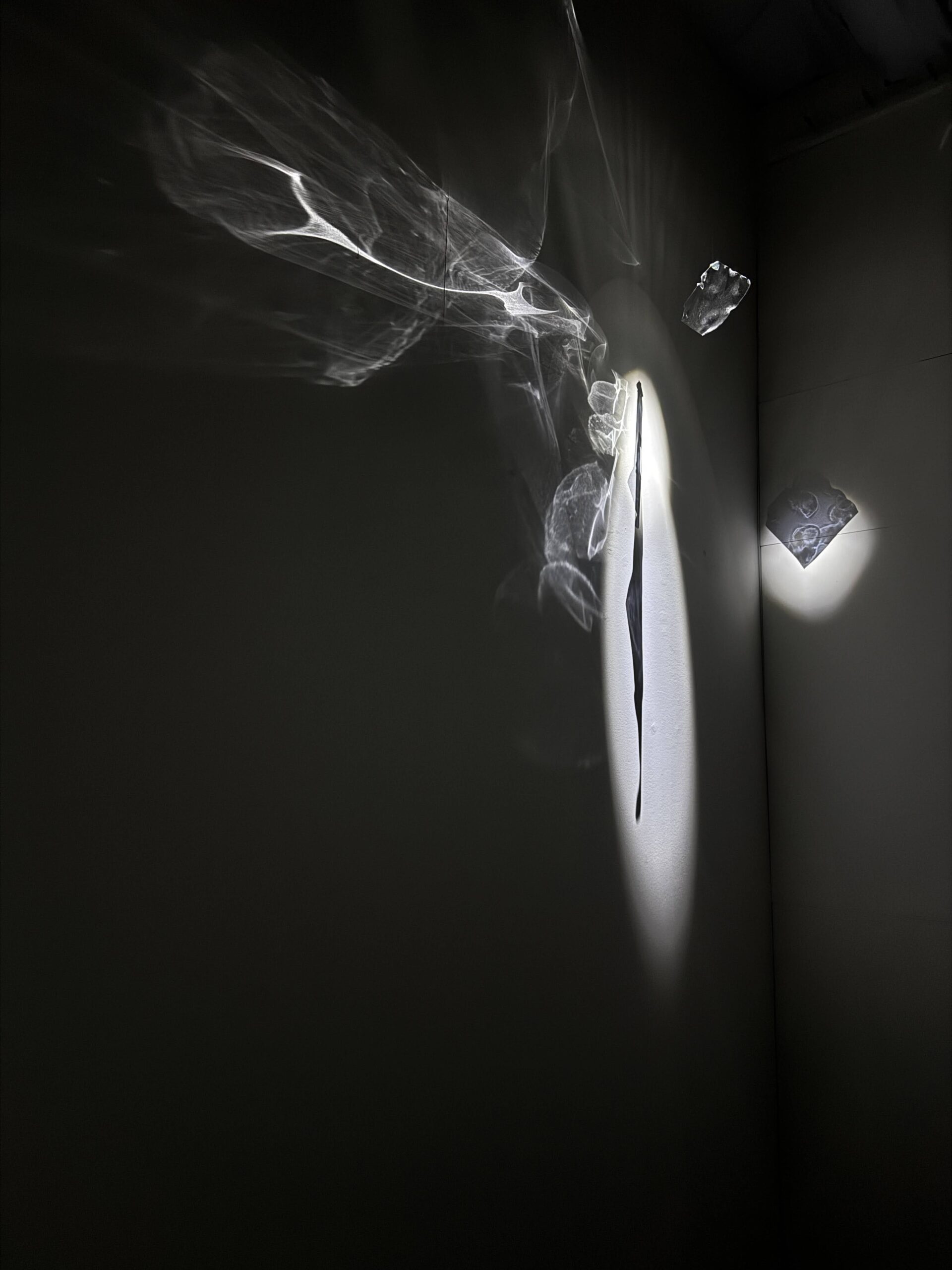
Shedding Skin, 2025 Espacio Flexible – Nave Oporto, Madrid.
The Fall of Things, duo exhibition with Beatriz Ruibal.
Light, polyester, paper, and treated methacrylate. Site-specific installation.
‘Isabel Bonafé addresses fragility through matter, light, and the body. The combination of these three in her installations makes the space appear to vanish. Within this, there is a deceptive materialization of virtual elements and a transformation of what we perceive a priori. Hers is a landscape that never stops changing, always lingering in the attempt, caught on an infinite trajectory. She also speaks of time and memory, not so much to preserve it as to confront it. Her works delve into the depth found on the surface of things and question the relationship between object and appearance. They speak of places and the dust of those narratives that seem to remain frozen in memory. Her installation Shedding Skin is based on narratives tied to intimate yet geometric objects—porous as palimpsests—that belong to a biography but harbor multiple layers of history. The artist looks at what shies away from being seen, what is not perceived at first glance, what requires time and observation to decode the perceived object, what demands pause and patience. Light, materials, prints, and trompe l’œils configure undefined spaces to speak of lightness and absence. The artist embraces a hybrid form of storytelling in which the boundaries between intimate biography and history are blurred.’
Short version of the text by Bea Espejo for the exhibition The Fall of Things.